
Branding vs Marketing — Understanding the Difference Before You Step Into a New Year
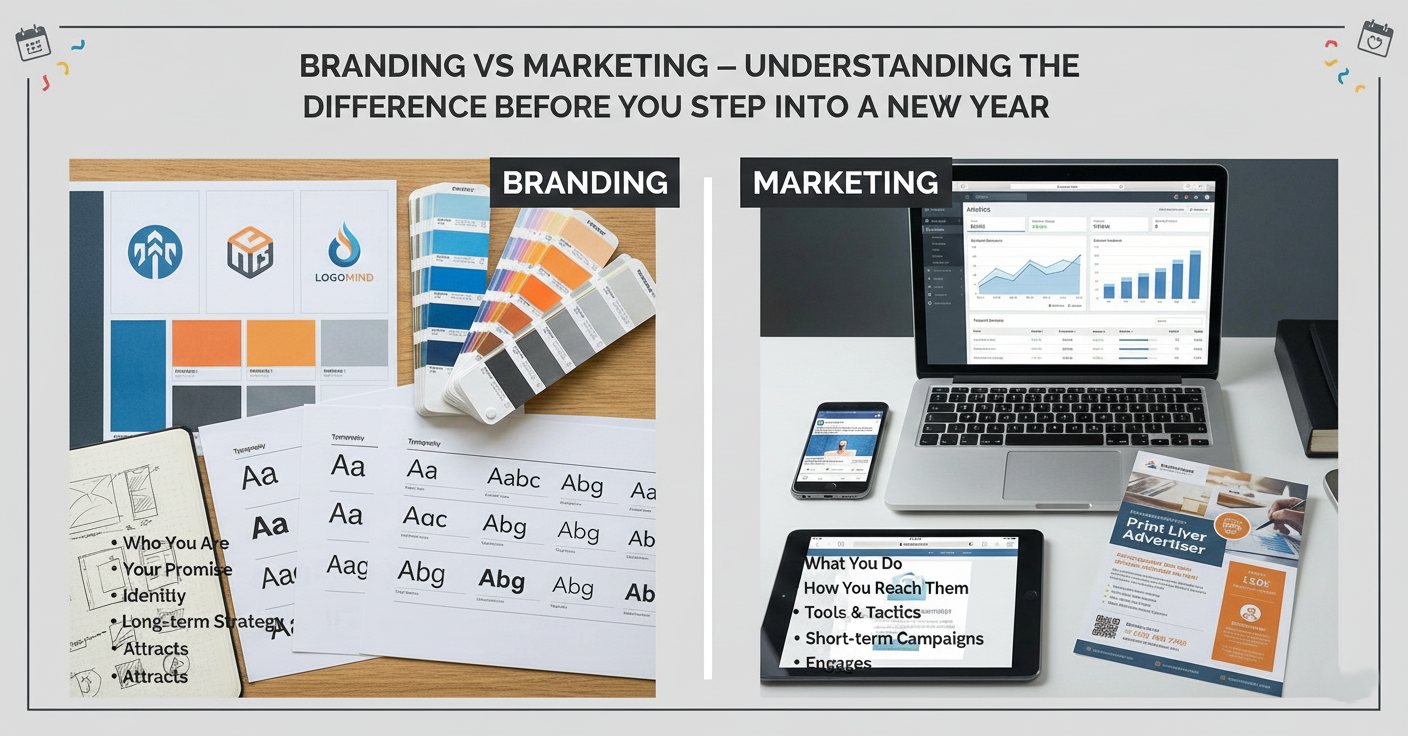
Your brand is who you are.
Your marketing is how you tell people about it.
As simple as that sounds, many business owners mix the two — especially when planning for a new year. And that confusion often leads to scattered messaging, inconsistent visuals, and marketing that doesn’t convert.
So in this post, we’ll break down the real difference between branding and marketing, why they rely on each other, and how understanding both will help you start the new year with clarity and confidence.
What Is Branding? (Your Identity)
Branding is the foundation of your business. It’s the meaning, emotion, and reputation that people attach to your name, before they ever interact with your products.
Branding includes:
Your brand purpose
Your brand personality
Your visual identity (logo, colors, typography)
Your tone of voice
The feelings your brand creates
The perception people hold about you
Branding answers who you are and why you matter.
You build your brand once.
You strengthen it continuously.
What Is Marketing? (Your Visibility)
Marketing is the strategy you use to reach your audience and promote what you offer.
Marketing includes:
Social media content
Paid advertising
Search engine optimization
Email campaigns
Content marketing
Sales funnels
Promotions and launches
Marketing answers how people find you and why they should choose you now.
Marketing changes depending on trends, seasons, and platforms.
Branding vs Marketing — The Key Difference
Branding is internal.
Marketing is external.
Branding shapes perception.
Marketing drives action.
Branding creates loyalty.
Marketing creates visibility.
Branding remains steady.
Marketing adapts.
Think of it like this:
Branding builds trust.
Marketing uses that trust to sell.
Why This Matters Before a New Year
December is the perfect time to pause and reflect:
Is your brand identity still aligned with your goals for the coming year?
Does your brand’s tone match where you want your business to grow?
Are your marketing strategies effective, or are they undermining your brand?
Are you consistent across platforms, visuals, and messaging?
Clear branding sets the tone for effective marketing.
When your branding is strong, your marketing becomes easier and more profitable.
How Branding Supports Marketing in 2026
Going into a new year, this relationship becomes even more important:
1. Branding guides your content strategy
If your brand is bold and confident, your 2026 content should sound bold and confident.
2. Branding defines your ideal audience
Your marketing becomes more targeted.
3. Branding gives consistency across campaigns
Your ads, emails, and social media feel cohesive.
4. Branding increases trust, which increases conversions
Marketing can bring people in, but only branding keeps them coming back.
Quick Examples to Make It Clear
Branding Example:
A wellness brand that stands for calm, balance, and simplicity.
Colors: soft neutrals
Tone: gentle, reassuring
Promise: “Helping you create peace in everyday life.”
Marketing Example:
A December campaign promoting “Holiday Stress Relief Kits” with:
Instagram reels
Pinterest graphics
A gift guide email
A holiday discount code
Branding sets the tone.
Marketing spreads the message.
Together, they make sales happen.
End-of-Year Reflection Questions
If you want your 2026 marketing to work, start here:
What feeling do you want your audience to associate with your brand?
Are your visuals consistent across every platform?
Is your messaging aligned with the clients you want to attract next year?
Does your marketing sound like your brand or like trends?
These questions will help you enter the new year with intention.